| April 17, 2026 | |||
PowerStream Inverter FAQ |
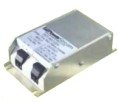 Inverter that converts 12VDC to 24VAC pure sinewave for video, security, and irrigation systems. 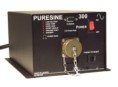 Special Purpose, Industrial, Military, 3-Phase and 24VAC inverters |
||
 |
|||
|
Custom design and manufacture of state-of-the-art battery chargers, UPS, and power supplies for OEMs in a hurry! Inverter Tutorial and Frequently Asked Questions: Q: What is an inverter? A: An inverter takes DC power (from a battery or solar panel, for example) and converts it into alternating current (AC) "household" power for running electronic equipment and appliances. Q: Why are they called inverters? A: Originally converters were large rotating electromechanical devices used to convert AC to DC. It is what you have to do if you don't have semiconductor or vacuum tube rectifiers. Essentially they combined a synchronous ac motor with a commutator so that the commutator reversed its connections to the ac line exactly twice per cycle. The results is ac-in dc-out (with a lot of switching noise thrown in). If you invert the connections to a converter you put dc in and get ac out. Hence an inverter is an inverted converter. For more information about such converters see http://www.nycsubway.org/tech/power/rotary.html (thanks to Karl W.Berger, PE for this answer). Q: How is an inverter different than a UPS? A: A UPS typically includes the inverter, battery and battery charger in one stand-alone unit. However, there are UPSs that use external batteries, and PowerStream has made inverters with battery chargers, so the differences blur as features proliferate. UPSs also can have communication with the equipment that it is powering, which lets the equipment know that it is operating on standby, giving it shutdown warning, or communicating with the human in the loop. Inverters typically don't have this communication. Q: What if I want a DC output to run such things as a laptop from a car cigarette lighter, or telephone equipment at -48 volts? A: Then you want a DC/DC converter. PowerStream has many DC/DC converters just for those purposes. /dcdc.htm Q: What is the difference between sine wave and modified sine wave? A: Alternating current (AC) has a continuously varying voltage that swings from positive to negative. This has great advantages in power transmission over long distances. Power from your power company is carefully regulated to be a perfect sine wave, because that is what naturally comes out of a generator, and also because sine waves radiate the least amount of radio power during long distance transmission. On the other hand, a sine wave is expensive to make in an inverter, and many sine wave techniques use heavy, inefficient transformers. The most inexpensive way to make AC is to switch the DC on and off--a square wave. A modified sine wave is scientifically designed to simulate a sine wave in the most important respects so that it will work for most appliances. It consists of a flat plateau of positive voltage, dropping abruptly to zero for a while, then dropping again to a flat plateau of negative voltage, back to zero for a while, then returning to the positive voltage. This pause at zero volts puts more power into the 60HZ fundamental than a simple square wave does, so it is called "modified sine wave" instead of "square wave." Because the MOSFETs only have to turn completely on and completely off the dissipate he least amount of heat for the power generated, and so smaller semiconductors and heat sinks are needed than if you were trying to generate a real sine wave. Q: Can I use a modified sine wave inverter for my medical equipment? A: For Medical equipment, oxygen generators, etc. talk to the manufacturer of the equipment. PowerStream inverters are never tested or rated with medical equipment, and we don't guarantee that they will work to save your life. For such applications please find inverters that are rated and tested for such applications. Q: What about square wave inverters? A: These old-fashioned inverters are the cheapest to make, but the hardest to use. They just flip the voltage from plus to minus creating a square waveform. They are not very efficient because the square wave has a lot of power in higher harmonics that cannot be used by many appliances. Synchronous motors, for example, use the 60Hz component and turn the rest of the frequencies into heat. The modified sine wave is designed to minimize the power in the harmonics while still being cheap to make. Q: How do I know if I need a sine wave, or if I can live with a modified sine wave? A: The following gadgets work well with a modified sine wave: electric blankets, computers, motor-driven appliances, toasters, coffee makers, most stereos, ink jet printers, refrigerators, TVs, VCRs, many microwave ovens, etc. Appliances that are known to have problems with the modified sine wave are some digital clocks, some battery chargers, most light dimmers, some battery operated gadgets that recharge in an AC receptacle, some chargers for hand tools (Makita is known to have this problem in the past). In the case of hand tools, the problem chargers usually have a warning label stating that dangerous voltages are present at the battery terminals when charging. We would like to add to this FAQ any appliances that you have had trouble with, or had success with, using modified sine wave inverters. Q: Why do I hear buzzing on my stereo when using a modified sine wave inverter? A: Some inexpensive stereos use power supplies that cannot eliminate common-mode noise. These would require a sine wave inverter to operate noise-free. What you hear is some of the higher harmonics of the modified sine wave. Q: Why don't I measure rated voltages when using a multimeter on my modified sine wave inverter? A. The rated voltage is an RMS (root mean square--they square the value to make sure it is always positive, then average it, then take the square root of the average to make up for having squared it in the first place) measurement. Most multimeters are designed to give correct RMS readings when applied to sine waves, but not when they are applied to other waveforms. They will read from 2% to 20% low in voltage. Look for a voltmeter that brags about "True RMS" readings, and that will read correctly no matter what the wave shape is. Q: How should I select the right size inverter? A: First add up the power ratings of all the appliances, then buy the next larger inverter! At least that is the simple answer. Note, however, that some appliances, such as table saws, refrigerators, and microwaves have a surge requirement. PowerStream inverters are designed to supply such surges, but since every appliance has its own requirements sometimes you will need to get a bigger inverter than you would otherwise think. Note that the inverter isn't the only consideration when you are pondering the mysteries of start-up surges. The battery must also be able to supply the surge power, and the cables must be able to supply the increased current without dropping the voltage too much. Q: How is a microwave rated for wattage? A: When you buy a microwave oven you want to know how intense the microwave field is, not how much the oven draws from the wall. So a microwave oven that boasts 600 watts on the box, will have an input requirement of 1200 watts on the boilerplate in the back. Don't be fooled! Q: Are stereo amplifiers rated the same way? A: Stereo manufacturers are bigger liars than politicians. Some times they use peak output power (milliseconds), sometimes they use power drawn from the wall, but often they just look at the competition's carton front and add 10%. However the truth is available: look at the boilerplate sticker, which has been evaluated by UL. This will give the maximum possible power drawn, so it tends to be higher than you will actually draw. Q: Why do I need such humongous cables to the battery when a small cord takes the AC output fine? A: Power is volts times amps (Watts = V x A). So if you have a lot of voltage you don't need many amps to get a watt. Roughly you need 12 times as much current from the 12 volt battery as you need from the 110 volt AC outlet. Current is what causes cables to heat up, not voltage. That is why they use thousands of volts in long distance power transmission grids. The thing to do when you have lots of current is to lower the resistance of the cable. The larger the wire the lower the resistance. Think of the cable as a water pipe. A big pipe (wire) can carry more water (current or amperage) with less pressure (voltage), and will present less pressure (voltage) drop from one end of the pipe to the other. Another consideration is how far the cable has to run from the battery to the inverter. Long cable runs are expensive, either in copper or efficiency, or both. Q: Why would you use a 24 volt inverter instead of a 12 volt inverter? A. At a given power rating a 24 volt inverter will need half the current as a 12 volt inverter. This makes the entire system more efficient, and since high current transistors are expensive, the inverter will be cheaper. Q: Should I use aluminum wire, or must I use copper? A: Aluminum is cheaper and lighter, but it also has higher resistance for a given gauge, and is more difficult to connect to. If you are an expert in such things, or know one, and need the advantages that aluminum gives, go ahead. If not, why not use the best conductor, copper? (Silver is slightly better, but it is cheaper to use a larger diameter copper). To compare the two look at our web page /Wire_Size.htm . Make sure to use good insulation, 90°C rated or better. Also, running two sets of parallel wires instead of one large one can cut down on the wire heating due to more surface area. Make sure to follow all applicable electrical codes. Inverters must be grounded properly, and treated with respect, since they put out potentially lethal voltage. A lot of smart people have worked for 100 years to develop rules which will keep you out of trouble if followed. These rules are called the national electrical code, and your friend the electrician has it memorized (or knows where to look it up). Q: Should I use a laser printer with an inverter? A: Only if you must. Laser printers use up a surprising amount of power (due to the heated fusing rollers), and will discharge your battery faster than you expect, even on standby. If you do, make sure the inverter is rated for the power of the printer plus computer plus monitor. It doesn't do any good to have your computer brown out as soon as the the printer starts to print. Ink jet printers, on the other hand, use a surprisingly low amount of power. |
|||
|
|
|
| |||||||||