| May 12, 2021 | |||||||||||||||||||
Lithium-ion unintended rapid disassembly |
 |
||||||||||||||||||
|
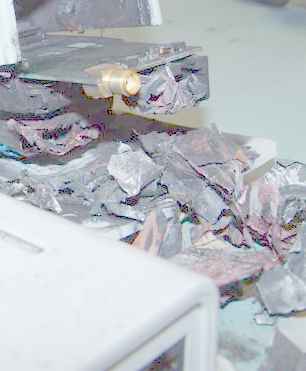
Bad Lithium Ion Charging Basics Most systems using lithium-ion or lithium-polymer batteries use a two-stage safety system. The first stage is the battery charger, which is designed to safely charge the battery. The second stage is the safety board, which prevents the battery from damage if the charger goes haywire.Occasionally for systems where the battery is not replaceable developers don't put in a separate safety board, but rely on other features of their internal circuitry to keep the battery safe. This is what happened to this prototype developed by one of our customers. They were using a single 900 mAH battery metal can prismatic battery without a safety board. An internal DC/DC converter failed, presenting 6 volts 0.5 amps across the single 3.6 volt prismatic lithium-ion cell. The cell not only caused the damage shown here, but filled the room with black soot covered, a large area with battery pieces and burned spots on the carpet. Moral: please friends, be safe.
Custom design and manufacture of state-of-the-art battery chargers, UPS, and power supplies for OEMs in a hurry! |
|||||||||||||||||||
|
|
|
| |||||||||