| April 26, 2024 | |||
NiCad Battery Charging Basics |
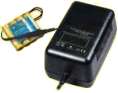 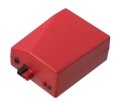 Battery
capacity tester for small and tiny cells Battery
capacity tester for small and tiny cells NiCad/NiMH charger catalog page |
||
NiCad (NiCd, Nickel Cadmium) Battery ChargingNickel Battery Charging BasicsNiCad and NiMH batteries are amongst the hardest batteries to charge. Whereas with lithium ion and lead acid batteries you can control overcharge by just setting a maximum charge voltage, the nickel based batteries don't have a "float charge" voltage. So the charging is based on forcing current through the battery. The voltage to do this is not fixed in stone like it is for the other batteries. This makes these cells and batteries especially difficult to charge in parallel. This is because you can't be sure that each cell or pack is the same impedance (or resistance), and so some will take more current than others even when they are full. This means that you need to use a separate charging circuit for each string in a parallel pack, or balance the current in some other way, for example by using resistors of such a resistance that it will dominate the current control. The coulometric charging efficiency of nickel cadmium is about 83% for a fast (C/1 to C/0.24) charge, and 63% for a C/5 charge. This means that at C/1 you must put in 120 amp hours in for every 100 amp hours you get out. The slower you charge the worse this gets. At C/10 it is 55%, at C/20 it can get less than 50%. (These numbers are just to give you an idea, battery manufacturers differ). When the charge is complete oxygen starts being generated at the nickel electrode. This oxygen diffuses through the separator and reacts with the cadmium electrode to form cadmium hydroxide. This causes a lowering of the cell voltage which can be used to detect the end of charge. This so-called minus delta V/ delta t bump that is indicative of end-of-charge is much less pronounced in NiMH than NiCad, and it is very temperature dependent. Many of the chargers listed here use a sophisticated algorithm that uses the -deltaV to accurately charge NiMH and NiCad packs /NiCad-NiMH-Catalog.htm As the battery reaches end-of-charge oxygen starts to form at the electrodes, and be recombined at the catalyst. This new chemical reaction creates heat, which can be easily measured with a thermistor.. This is the safest way to detect end-of-charge during a fast charge. This method is often used with multi-cell packs and the 20, 30, and 40 cell pack chargers here use a thermistor /NiCad-NiMH-Catalog.htm Nickel cadmium battery chargers should cut the charge off when the temperature exceeds the maximum charging temperature, typically 45 degrees C for a controlled fast charge, and 50 degrees C for an overnight or fast charge. Overnight Battery ChargingThe cheapest way to charge a nickel cadmium battery is to charge at C/10 (10% of the rated capacity per hour) for 16 hours.. So a 100 mAH battery would be charged at 10 mA for 16 hours. This method does not require an end-of-charge sensor and ensures a full charge. Cells can be charged at this rate no matter what the initial state of charge is. The minimum voltage you need to get a full charge varies with temperature--at least 1.41 volts per cell at 20 degrees C. The best charging practice is to use a timer to prevent overcharging to continue past 16 hours. An example of this kind of charger is shown at /Ni-6-200.htm . This charger uses a microprocessor to report the state of charge via an LED as well as performing the timing function. Faster ChargingSome nickel cadmium cells are designed to be "quick chargeable." This is just a timed charge at C/3 for 5 hours, or C/5 for 8 hours. This is risky because the battery should be fully discharged before charging. If the battery still has 90% of its capacity when the timer starts you would have a good chance of venting the battery. One way to ensure this doesn't happen is to have the charger automatically discharge the battery to 1 volt per cell, then turn the charger on for 5 hours. The advantage of this method is to eliminate any chance of battery memory. PowerStream does not currently have such a charger, but the microprocessor board used in the C/10 charger /NiMH-NiCad-solar-charge-controller.htm could easily be modified to do the discharge. A power dissipating package would be needed in order to dissipate the energy from a partially charged battery in a reasonable amount of time. Fastest ChargingIf a temperature or voltage monitor is used NiCad batteries can be charged at rates up to 1C (in other words 100% of the battery capacity in amp-hours for 1.5 hours). The PowerStream battery charge controller shown here does this, as does the battery management board shown here The termination can be done with minus delta V, when the battery voltages drops -10 to -20 mV per cell. To terminate the charge on temperature requires a temperature slope measurement.This board also has the ability to sense voltage and current for more sophisticated algorithms required for ultra-fast charging. These algorithms require constant monitoring of the voltage, temperature, and sometimes pressure, to actively determine the amount of current a battery can take without damage. This is sometimes called a smart charge, or a controlled fast charge. A cheaper version of the fast charger can be made by just monitoring absolute temperature. The charge rate is set at C/2 until 45 degrees C is reached, then switched over to a C/10 charge to complete the charge. This is the most common NiCd fast charger of the 1960's through the 1980s because it could be controlled by a simple bimetallic thermostat switch mounted on the battery. Trickle Charging Nickel BatteriesIn a standby mode you might want to keep a nickel cadmium battery topped up without damaging the battery. This can be done safely at a current of between 0.05 C and .06 C. The voltage required for this is dependent on temperature, so be sure to regulate the current in the charger. Some manufacturers say C/100 for long term trickle Custom design and manufacture of state-of-the-art battery chargers, UPS, and power supplies for OEMs in a hurry! |
|||
|
|
|
| |||||||||